
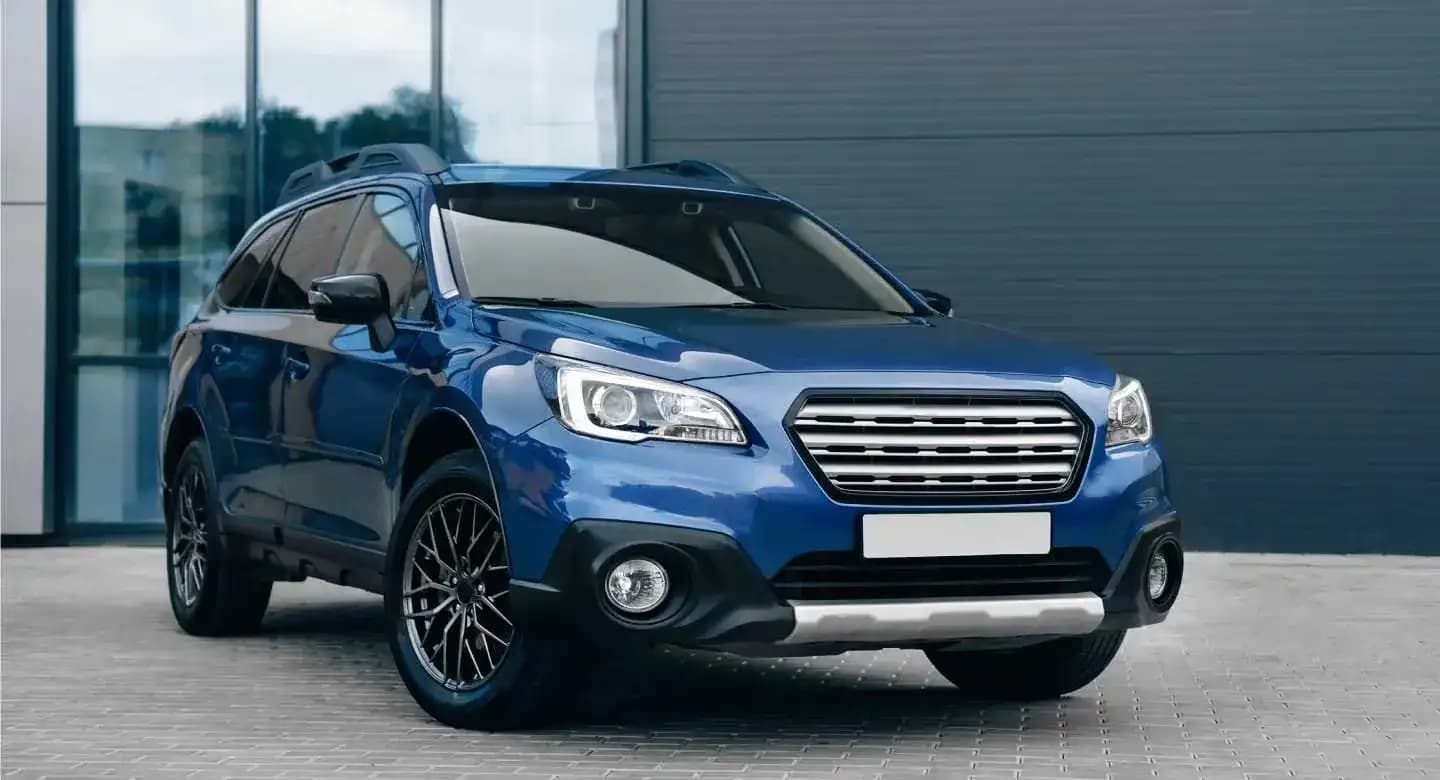
Rahul Verma's SUV has never scraped anything on his daily commute. It scrapes on exactly one occasion, the Sunday run to his in-laws with two children, two grandparents and a boot full of bags, on a stretch of road he has driven a hundred times alone without trouble. A 39-year-old product manager in Pune, he assumed he needed a car with more ground clearance. What he actually needed was to understand why the same car clears the same road on Tuesday and grinds on Sunday.
Ground clearance is the gap between the lowest fixed point of your car and the road. Here is the part that resolves Rahul's Sunday problem and that most lists skip: since 2017, India's official figure is measured with the car loaded, not empty, which means the number that matters is the one you have when the car is full. Most published lists still quote the empty figure. For the vast majority of Indian buyers, roughly 170-180 mm measured loaded is enough, which is less than the rankings imply.
What is ground clearance and how is it measured in India?
Ground clearance is the shortest distance from the road to the lowest fixed part of the car's underbody, ignoring tyres and wheels.
India measures it differently from most of the world, which is worth knowing before you compare a single number. The Automotive Research Association of India (ARAI) revised the standard in 2017 and a car's ground clearance is now measured in the laden state, loaded to its gross weight, which in practice means four adults aboard and at least 90 per cent fuel in the tank.
Term | What it means | Who uses it |
|---|---|---|
Unladen ground clearance | Measured with the car empty | Most international markets, most published lists |
Laden ground clearance | Measured with the car fully loaded | India's ARAI standard since 2017 |
Suspension compresses under load. So a laden figure is always lower than an unladen one for the same car and it represents the minimum clearance you have at all times rather than the best case.
Why does the same car show two different ground clearance figures?
You have probably noticed this without knowing why. One site lists an SUV at 210mm, another at 170 mm, and both are accurate.
They are quoting different standards. When ARAI moved to laden measurement, published figures fell across the board and some models' official numbers dropped by 40 to 50mm overnight without a single physical change to the car. Nothing about those vehicles got worse. The ruler changed.
Two things follow and they are the practical takeaways of this article.
The same model can carry a higher ground clearance figure abroad than in India, because most markets still measure unladen.
Manufacturers do not all publish the same way and some listings still carry older unladen values.
So when you compare two cars, check that you are comparing two figures of the same type. Ask the dealer for the ARAI-certified laden figure and compare those or compare unladen against unladen. Comparing one against the other is how buyers talk themselves into a car they did not need.
That is also Rahul's Sunday. His car's brochure number was the empty one. With six people and luggage aboard, the suspension settled and the real clearance was the laden figure all along.
How much ground clearance do you actually need in India?
Less than the lists suggest, provided you read the laden number.
Guidance widely cited for Indian conditions puts roughly 170 - 180 mm as suitable, with about 165mm as the practical floor for clearing speed breakers and potholes without regular contact. Measured laden, that range covers ordinary Indian road life comfortably.
Your driving | Laden ground clearance to look for |
|---|---|
City roads, occasional speed breakers | Around 165mm and up |
Broken roads, unpaved lanes, heavy monsoon | 170 to 180mm and up |
Rural tracks, construction routes, regular rough ground | 180mm and up |
Genuine off-roading, rock and slush | Look past clearance alone, see below |
If you drive on tarmac with speed breakers and the odd crater, you are choosing between cars that all clear the bar. Ground clearance should not be the number that picks your car.
Which cars have the highest ground clearance in India?
The figures below are the commonly published ones and are unladen unless a manufacturer states otherwise, so treat them as a like-for-like ranking rather than the clearance you will have on a loaded Sunday. Confirm the ARAI laden figure for the exact variant with your dealer.
Car | Published ground clearance | Built for |
|---|---|---|
Toyota Land Cruiser | 235mm | Serious off-road and expedition use |
Force Gurkha | 233mm | Extreme terrain and water wading |
Mahindra Thar | 226mm | Off-road ability with everyday usability |
Toyota Fortuner | 225mm | Long-distance touring over mixed surfaces |
Maruti Suzuki Jimny | 210mm | Light, agile trail driving |
Maruti Suzuki Grand Vitara | 210mm | Broken city roads with hybrid efficiency |
Toyota Urban Cruiser Hyryder | 210mm | Urban roads and gentle rough surfaces |
Tata Nexon | 208mm | Potholed city and highway running |
Kia Sonet | 205mm | City manoeuvrability with rough-road margin |
Mahindra XUV 3XO | Around 200mm | Compact SUV for everyday broken roads |
Read the right-hand column rather than the middle one. The Land Cruiser and the Nexon are not competing and nobody is choosing between them. What separates these cars is what they are engineered to do and ground clearance is a consequence of that design rather than the point of it.
If you are choosing between a compact SUV and a full off-roader, pick the compact SUV when your rough surfaces are broken city roads, ramps and speed breakers, since around 200mm published clearance handles those and you keep the easier drive and running costs. Pick the ladder-frame off-roader when you regularly leave tarmac, because what you are buying there is not the extra millimetres, it is everything described next.
Does more ground clearance mean better off-road ability?
Not on its own and this is where a simple ranking misleads. Clearing an obstacle depends on more than the gap under the middle of the car.
Measurement | What it governs |
|---|---|
Approach angle | How steep a rise can you drive onto before the front bumper touches |
Departure angle | How steep a drop can you leave without catching the rear bumper |
Breakover angle | Whether you beach on a crest, which depends on wheelbase as much as clearance |
Wheelbase | A long car with high clearance can still get stuck on a crest that a short car clears |
This is why a purpose-built off-roader with a short wheelbase and steep angles will go places a taller crossover cannot and why two cars with identical clearance figures behave differently. A vehicle designed for trails is designed around all four numbers together. A vehicle designed for roads is designed around ride comfort and stability, with enough clearance to shrug off bad tarmac. Both are doing their job. They are simply not the same job.
What does high ground clearance cost you?
Every millimetre of clearance is bought with something and an honest list says so.
Raising a car raises its centre of gravity, which is why tall vehicles lean more in corners than low ones and why cars engineered for handling sit low deliberately. There is also the everyday cost people notice late. A high floor is harder for elderly parents and young children to climb into, a genuine consideration for a family car and one Rahul weighed more heavily than any number on a chart.
None of this argues against clearance. It argues against buying more of it than your roads require.
Can you increase your car's ground clearance?
You can and this section is worth reading carefully, because it is where a good intention becomes an expensive surprise.
Larger tyres, spacers or suspension lift kits will raise a car. They also alter the vehicle from the specification under which it was registered and insured. Any material alteration needs to be declared to your insurer and endorsed on the policy, since an undeclared modification can give grounds to question a claim, which is a poor trade for a few millimetres. Larger tyres additionally change your speedometer reading and can affect handling and braking. Declare it first and confirm in writing that your cover continues to apply.
How does ground clearance affect your car insurance?
Clearance itself is not a rating factor. What it changes is the damage you are exposed to and that is worth matching to your cover.
A comprehensive policy covers sudden, accidental damage, including underbody damage from striking an object and flood damage to the car. Two gaps are worth knowing.
Hydrostatic lock catches people out. If water enters the engine and damages it, particularly when someone tries to restart a car standing in water, that damage is typically not covered by a standard comprehensive policy. An engine protection add-on addresses it, subject to policy terms and is worth evaluating if you drive a lower car or live where roads flood.
Repeated scraping is the other. Gradual wear is not a claim, since wear and tear is a standard exclusion in Indian motor policy wording. Striking something once is a different matter from a bash plate worn down over three monsoons.
Ask your insurer one exact question: does my policy cover engine damage from water ingress or do I need the engine protection add-on for that? Zurich Kotak General Insurance Company (India) Limited offers comprehensive plans with add-ons of this kind and the policy wording sets out exactly what each covers.
Conclusion
Rahul did not buy a new car. He learned that his brochure number was the empty one, that his laden clearance would always be lower, and that the Sunday scrape was physics rather than a design flaw. He now takes that one ramp at an angle and carries the heaviest bag in the cabin rather than in the boot.
Before ground clearance decides your purchase, do three things. Ask for the ARAI-laden figure rather than the marketing number, and compare like with like. Match that figure to the roads you genuinely drive, where 170 to 180 mm laden covers most Indian conditions. And if you are shopping for real off-road ability, look at approach, departure and breakover angles too, because clearance alone will not get you over anything.
The best ground clearance car is not the one at the top of a list. It is the one that clears your roads with your family in it.
Get a Car Insurance Quote in 60 seconds
Frequently asked questions
What is a good ground clearance for Indian roads?
Roughly 170 to 180mm measured laden suits most Indian conditions, with around 165mm as a practical minimum for speed breakers and potholes. Since India's official figures are measured with the car loaded, that range already accounts for a full car.
Why does my car's ground clearance look lower than the same model abroad?
Because India measures it differently. ARAI has required laden measurement, with the car loaded to gross weight, since 2017, while most international markets still quote unladen figures. The car is identical, the standard is not.
Does ground clearance affect mileage?
Indirectly. A taller vehicle usually presents more frontal area and weighs more, both of which affect efficiency. The clearance figure itself is not the cause, the overall design is.
Will my insurance cover damage to the underbody?
A comprehensive policy covers sudden, accidental damage, so striking an object is generally claimable. Gradual scraping is wear and tear, a standard policy exclusion. Engine damage from water ingress usually needs an engine protection add-on, subject to policy terms.
Can I raise my car's ground clearance legally?
Modifications such as lift kits or larger tyres alter the vehicle from its registered and insured specification. Declare any material alteration to your insurer and have it endorsed on the policy or you risk a dispute at claim time.