
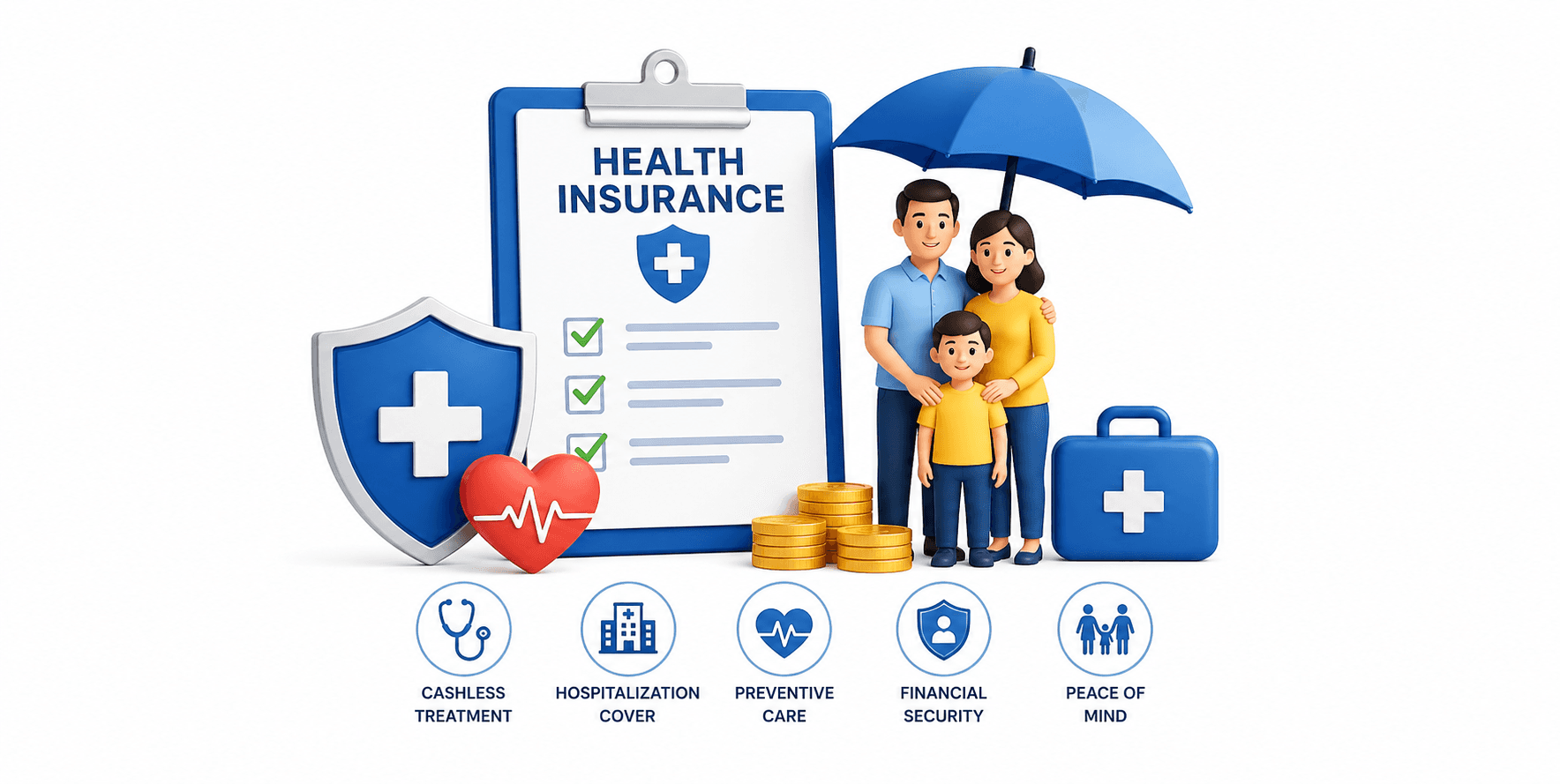
Health insurance is a formal agreement between you and an insurance company designed to manage your medical costs. In this arrangement, you pay a regular fee, known as a premium, and in return, the insurer pays for a portion of your covered healthcare expenses. This includes everything from routine doctor visits and prescriptions to major hospital stays and surgeries.
One of the most significant advantages of health insurance is that it provides a financial limit on your healthcare spending. By offering access to a network of doctors and negotiating lower rates, it prevents high medical bills from draining your savings. This structure ensures that you can get necessary treatments and preventative care for a predictable price, keeping both your health and your finances in good shape.
What is health insurance & why is it important?
Health insurance acts as a reliable resource for your ongoing medical needs. By paying a regular premium, you transfer the risk of expensive treatments to an insurance provider. Most policies cover a wide range of costs, including hospitalisation, consultations, medications, and lab tests. Depending on the terms of your plan, the insurer will either settle the bill directly with the hospital or reimburse you for the costs you paid yourself.
Read more - What Is Health Insurance? Meaning, Benefits, and How It Works
Why is health insurance important?
Maintaining a policy is a key part of a sound financial strategy for several reasons:
1. Protection against rising medical costs
Healthcare expenses are increasing rapidly. A single hospitalisation can significantly impact your savings. Health insurance ensures you don’t bear the full financial burden.
2. Access to quality healthcare
With insurance, you can choose better hospitals and treatments without worrying about high costs, ensuring timely, high-quality care.
3. Cashless treatment facility
Many insurers provide cashless services at network hospitals, so you don’t have to arrange funds during emergencies.
4. Coverage for critical illnesses
Some plans cover serious illnesses like cancer, heart disease, and more, which often require expensive long-term treatment.
5. Tax benefits
Under Section 80D of the Income Tax Act in India, you can claim deductions on the premium paid for health insurance.
6. Financial security for family
A comprehensive policy can extend protection to your spouse, children, and parents. This ensures that a medical crisis for one family member does not lead to a financial struggle for everyone else.
Key advantages of health insurance
Modern health policies offer a broad range of benefits designed to support your physical well-being and protect your financial future.
Comprehensive hospitalisation coverage:
Health insurance covers inpatient hospitalisation expenses, including room rent, doctor fees, surgery, ICU charges, nursing care, and medicines. It also includes pre-hospitalisation (usually up to 30 days) and post-hospitalisation (usually up to 60 days) expenses related to the treatment.
Coverage for day-care procedures:
Many medical procedures now require less than 24 hours of hospitalisation. Health insurance plans cover such day-care treatments, including chemotherapy, dialysis, cataract surgery, and minor surgeries.
Protection against rising medical costs
Medical inflation in India is significant. Health insurance cushions the financial impact of expensive treatments, surgeries, and critical-illness care , helping preserve your savings and financial stability.
Family floater plans for affordable coverage:
Family floater health insurance covers the entire family under a single sum insured, making it cost-effective and easier to manage than individual policies.
Maternity and newborn coverage
Many health insurance plans offer maternity benefits covering delivery (normal and C-section), pre- and post-natal care, and newborn baby coverage, subject to waiting periods.
Critical illness coverage
Optional riders or standalone plans provide lump-sum payouts upon diagnosis of critical illnesses such as cancer, heart attack, stroke, and renal failure, helping to manage treatment and recovery costs.
Ambulance and emergency services
Coverage for ambulance charges ensures timely transport to hospitals during emergencies without financial burden.
Cashless treatment facility:
Health insurance companies have tie-ups with extensive hospital networks, enabling cashless treatment where the insurer settles bills directly with the hospital.
Wellness and preventive health benefits:
Many plans include annual health check-ups, wellness programmes, and premium discounts for healthy behaviours, promoting early diagnosis and prevention.
Coverage for alternative treatments (AYUSH):
Many policies now recognise traditional healthcare methods. This includes coverage for Ayurveda, Yoga, Unani, Siddha, and Homoeopathy, giving you more choice in how you recover.
Domiciliary treatment coverage:
If a patient cannot be moved to a hospital or if a bed is not available, insurance can cover medical care provided at home, provided it meets the specific criteria of the policy.
Tax benefits under Section 80D:
You can reduce your taxable income by the amount you pay in premiums. The maximum deductions allowed under the Income Tax Act depend on who is covered:
Insured members | Maximum deduction allowed (₹) | Notes
|
|---|---|---|
Self, spouse, and dependent children (<60) | 25,000 | - |
Parents (<60) | 25,000 | Additional deduction beyond the above |
Parents (≥60) | 50,000 | Higher deduction for senior citizens |
Self + family + senior citizen parents | 75,000 | Combined limits |
Self (≥60) + senior citizen parents | 100,000 | Combined limits |
Preventive health check-up | Up to 5,000 | Included within the overall limit |
No-claim bonus and cumulative bonus
Policyholders receive bonus sum insured increments for claim-free years, enhancing coverage without increasing premiums.
Renewability and portability:
Health insurance policies offer lifelong renewability, ensuring continuous coverage. Portability allows switching insurers without losing benefits or waiting periods.
Different types of health insurance and the benefits they provide
Choosing the right health insurance plan becomes easier when you understand the different types available and the unique advantages each one provides. Evaluating the specific benefits of health insurance across various categories helps you make better decisions for your future security:
Type of health insurance | Description | Top benefits |
Individual health insurance | Covers a single person with a dedicated sum insured. | - Full coverage for one individual - Ideal for personal healthcare needs - No sharing of sum insured |
Family floater plan | Covers multiple family members under one policy with a shared sum insured. | - Cost-effective for families - Single premium for all members - Flexible usage of coverage |
Critical illness insurance | Provides a lump-sum payout upon diagnosis of specified serious illnesses. | - Covers life -threatening diseases - Financial support for expensive treatments - Can be used for non-medical expenses |
Senior citizen health insurance | Designed specifically for individuals aged 60 and above. | - Tailored coverage for age-related illnesses - Cashless hospitalisation - Peace of mind for elderly care |
Group health insurance | Offered by employers to employees as part of benefits. | - Low or no premium for employees - Immediate coverage (no waiting period) - Covers dependents in some cases |
Top-up & super top-up plans | Provide additional coverage beyond a specified deductible. | - Enhances existing coverage at low cost - Useful for high medical expenses - Affordable premiums |
Maternity health insurance | Covers expenses related to pregnancy, childbirth, and newborn care. | - Covers delivery and newborn expenses - Includes pre- and post-natal care - Financial support for growing families |
Personal accident insurance | Covers accidental injuries, disability, or death. | - Financial compensation for accidents - Covers disability and loss of income - Affordable add-on option |
Read more - Types of Health Insurance Plans in India
How to choose the best health insurance plan?
Selecting the right health insurance plan is essential to ensure adequate coverage and financial security during medical emergencies. Some of the key factors to consider when choosing the right plan are:
1. Assess your healthcare needs
Start by evaluating your age, medical history, lifestyle, and family health conditions. If you have dependents, consider a family floater plan; otherwise, an individual plan may suffice.
2. Choose an adequate sum insured
Opt for a sum insured that can cover rising medical costs. In India, a minimum of ₹5–10 lakh is recommended, but higher coverage is advisable for metro cities or families.
3. Check the network hospitals
Ensure the insurer has a wide network of hospitals, especially near your location. This allows you to access cashless treatment conveniently during emergencies.
4. Understand coverage and inclusions
Carefully review what the policy covers, including hospitalisation, pre- and post-hospitalisation, daycare procedures, ambulance charges, and critical illnesses.
5. Look for waiting periods
Most policies have waiting periods for pre-existing diseases, maternity benefits, and specific treatments. Choose a plan with shorter waiting periods if possible.
6. Compare premium vs benefits
Don’t just go for the lowest premium. Compare the benefits offered against the cost to ensure you’re getting value for money.
7. Check the claim settlement ratio
A high claim settlement ratio indicates the insurer’s reliability in settling claims. This is a critical factor in emergencies.
8. Review sub-limits and co-payment clauses
Some policies have limits on room rent, specific treatments, or require you to share a percentage of the claim (co-payment). Choose plans with minimal restrictions.
9. Consider add-ons and riders
Enhance your coverage with add-ons like critical illness cover, maternity benefits, room rent waiver, or personal accident cover based on your needs.
10. Check renewal benefits and lifelong renewability
Ensure the policy offers lifelong renewability and benefits like No Claim Bonus (NCB), which increases your coverage over time.
11. Read policy exclusions carefully
Understand what is not covered, such as cosmetic procedures, certain diseases in the initial period, or non-medical expenses, to avoid surprises later.
How to purchase health insurance plans online?
Buying health insurance online is quick, convenient, and can be completed in just a few simple steps.
1. Visit the official website
Go to the official website of Zurich Kotak General Insurance and go to the health insurance section. This is where you can explore plans like Health 360 and begin your purchase journey.
2. Click on “Get a Quote”
On the health insurance page, click the “Get a Quote” button. This will initiate the process and help you get a premium estimate based on your requirements.
3. Enter your details
Fill in essential information such as:
Number of adults and children to be covered
Mobile number and basic personal details
Any additional health-related information (if required)
This step helps customise the plan and calculate an accurate premium.
4. Choose the right plan
Browse through the available options and select a plan that suits your healthcare needs and budget. You can compare features like sum insured, coverage benefits, and add-ons before making a decision.
5. Make the payment online
Once you’ve selected the plan, proceed to make the payment through secure online modes like debit card, credit card, UPI, or net banking.
6. Download the policy document
After successful payment, your policy will be issued instantly. You can download the insurance policy document directly from the website or receive it via email.
What are the benefits of a Health insurance premium calculator?
A health insurance premium calculator is a simple online tool that helps you estimate the premium you need to pay for a policy based on your details. It not only saves time but also helps you make smarter insurance decisions. Here are its key benefits:
1. Accurate premium estimation
It gives you a quick and fairly accurate estimate of the premium based on factors like age, coverage amount, family size, and medical history.
2. Easy comparison of plans
You can compare multiple health insurance plans side by side, helping you choose the one that offers the best value for money.
3. Saves time and effort
Instead of manually calculating or contacting insurers, the calculator provides instant results within seconds.
4. Helps in budget planning
By knowing the premium in advance, you can plan your finances better and choose a plan that fits your budget.
5. Customisation options
You can adjust variables like sum insured, add-ons, and coverage type to see how they impact your premium, allowing better customisation.
6. Transparency in costs
It clearly shows how different factors affect your premium, ensuring there are no hidden surprises later.
7. Better decision-making
With clear estimates and comparisons, you can make informed decisions rather than relying on guesswork or sales pitches.
8. Accessibility and convenience
Available online anytime, these calculators can be used from anywhere without needing expert assistance.
Factors influencing health insurance premiums
Understanding the key drivers behind your insurance costs can help you manage your financial planning more effectively. Premiums depend on:
Age and gender
Sum insured amount
Medical history and pre-existing conditions
Policy type (individual or family floater)
Add-ons and riders selected
Waiting periods
Lifestyle factors (smoking, occupation)
GST (currently 18% as per IRDAI)
Tips to maximise health insurance benefits
Strategic planning and regular policy reviews ensure you receive the most value and protection from your health coverage.
Buy early to lock in lower premiums and complete waiting periods
Choose an adequate sum insured based on the city and family health history
Opt for family floater plans for cost efficiency
Use network hospitals for cashless claims
Utilise preventive health check-ups offered by the insurer
Understand policy terms, exclusions, and claim process
Add riders like critical illness or maternity as per needs
Renew policies timely to avoid lapses and loss of benefits
Common exclusions and waiting periods
It is essential to be aware of the specific conditions and timeframes that may limit your ability to file a claim.
Pre-existing diseases usually have a waiting period of 2-4 years
Cosmetic treatments, self-inflicted injuries, and non-medical expenses are excluded
Waiting periods apply for maternity and certain illnesses
Policy terms specify detailed exclusions; always review before purchase
Conclusion
Health insurance offers essential financial protection against escalating medical costs, ensuring access to quality healthcare without depleting savings. Key advantages include comprehensive hospitalisation coverage, day-care procedures, maternity benefits, critical illness cover, ambulance charges, wellness programmes, and tax benefits under Section 80D. Family floater plans provide affordable coverage for multiple members under one policy. Early purchase and timely renewal help secure lower premiums and uninterrupted protection. Understanding policy terms, waiting periods, and exclusions is vital to maximise benefits. Utilising cashless treatment at network hospitals and preventive health check-ups further enhances value. Health insurance is a critical component of financial planning, safeguarding individuals and families from unforeseen health expenses.
FAQs
Q1. What are the main benefits of health insurance?
Health insurance provides financial protection against medical expenses, covers hospitalisation, day-care procedures, pre/post hospitalisation, ambulance charges, maternity, critical illness, and offers tax benefits.
Q2. Can I cover my entire family under one health insurance policy?
Yes, family floater plans cover the policyholder, spouse, children, and sometimes parents under a single sum insured.
Q3. How does cashless treatment work?
Cashless treatment allows you to get hospitalised at network hospitals without paying upfront. The insurer settles the bills directly with the hospital.
Q4. Are pre-existing diseases covered immediately?
No, pre-existing diseases are covered after a waiting period , typically 2-4 years, depending on the policy.
Q5. What tax benefits are available on health insurance premiums?
Premiums paid for self, family, and parents are eligible for deductions under Section 80D, up to specified limits.
Q6. What is a waiting period in health insurance?
A waiting period is the time during which claims for certain illnesses or conditions are not payable.
Q7. Can I buy add-ons or riders with my health insurance?
Yes, you can customise your policy with riders like critical illness cover, maternity benefits, hospital cash, etc.
Q8. How can I estimate my health insurance premium?
Use online premium calculators provided by insurers by entering your age, sum insured, and other details.
Q9. Is health insurance renewable for life?
Most insurers offer lifelong renewability, ensuring continuous coverage.
Q10. Does health insurance cover alternative treatments?
Some policies cover AYUSH treatments like Ayurveda and Homoeopathy.