
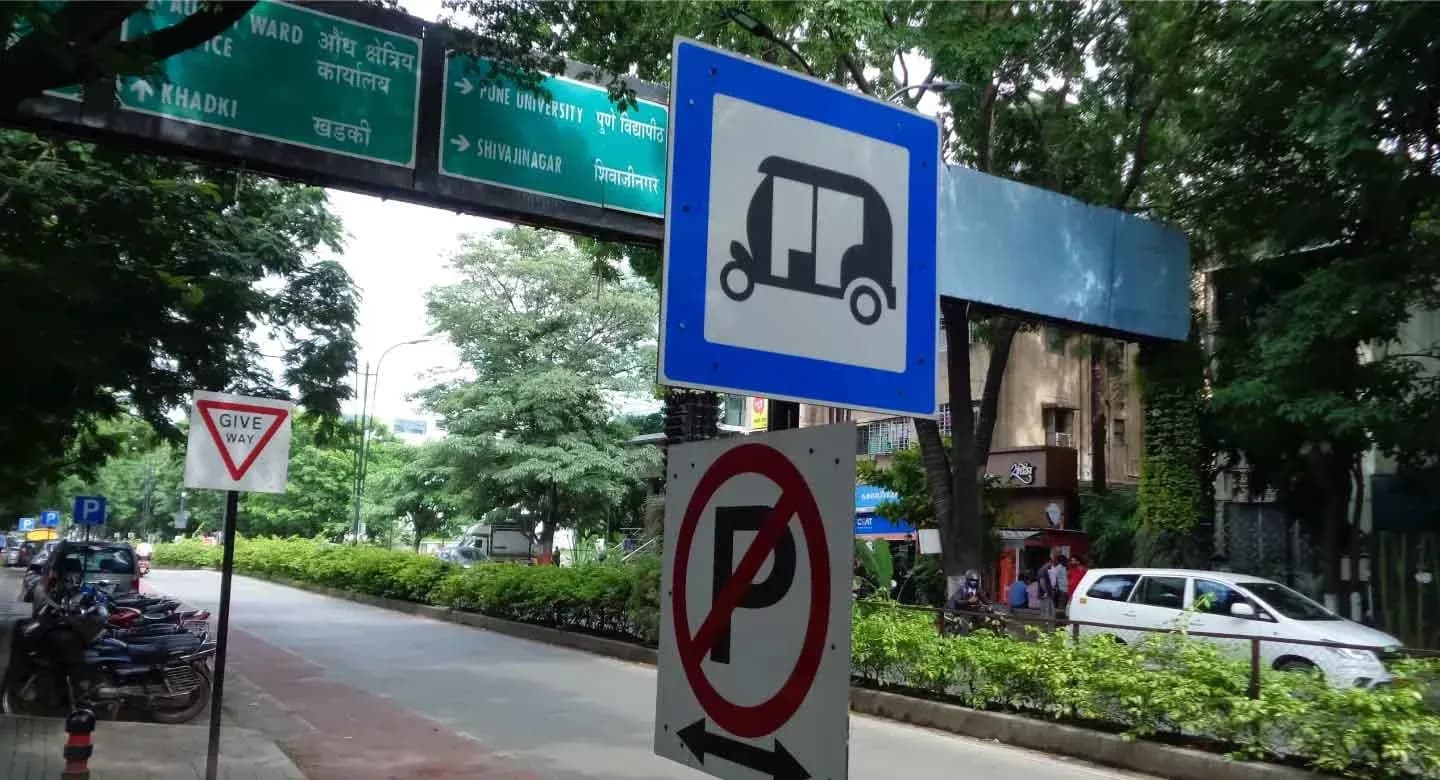
Finding a parking spot in Indian cities is a daily challenge. Whether you are heading to a market, a restaurant, or a government office, parking your vehicle in the wrong spot can result in a challan, a fine, or even towing. Under Section 122 of the Motor Vehicles Act, 1988, parking violations are a punishable offence, alongside the other traffic safety rules drivers are expected to follow.. The Motor Vehicles (Amendment) Act, 2019 further increased the penalties for such violations.
This guide covers the parking rules you must follow, the fines applicable across major cities, and what happens if your vehicle is towed or clamped. Just as you keep your car insurance up to date to protect your vehicle financially, staying aware of parking rules helps you avoid unnecessary penalties on the road.
Parking Rules in India You Need to Follow
The following rules apply to all vehicle owners across India under the Motor Vehicles Act, 1988 and local traffic regulations:
General Parking Rules
Do not park your vehicle in a way that is unsafe, obstructs other road users, or creates a hazard.
Always park in compliance with road signs and kerb markings that indicate parking restrictions.
Do not park your vehicle in a position that blocks or is too close to any of the following:
• Traffic signals or traffic lights
• Traffic signs or symbols
• Zebra crossings
• Road corners or intersections
Prohibited Parking Locations
Under Section 122 of the Motor Vehicles Act, 1988, you must not park your vehicle in any of the following places:
• In an area marked as a 'No Parking' zone
• Anywhere vehicle parking is expressly prohibited by signage or road markings
• On a footpath, sidewalk, or pavement
• At an excessive distance from a footpath or kerb
• On private property without the owner's permission
• On a main road or any road with heavy traffic flow
• In a manner that obstructs traffic flow
• Double-parked or on the wrong side of an already parked vehicle
• On the wrong side of the road with respect to the direction of traffic
• On a road marked with a continuous centre line
• In front of a gate or in a way that obstructs building access
• Within the vicinity of a hospital entrance, school gate, or designated bus stop
• In a position that hides or obstructs a road sign or stop sign
• On or near a bridge
• On a steep incline
• In an unattended manner for an extended period in a public place
• In a dark, unlit area at night without keeping your hazard or parking lights on
No-Parking Fine Amounts Across Major Indian Cities
Fine amounts for parking violations vary by city and type of vehicle. The table below gives indicative figures based on current traffic authority schedules. These amounts are subject to revision; always verify with your local traffic authority.
City | Car Fine (Rs) | Two-Wheeler Fine (Rs) | Towing Charge (Rs) | Section |
Mumbai | 1,000 - 2,000 | 500 - 1,000 | 450 - 800 | Sec 122 MVA |
Delhi | 500 - 2,000 | 500 - 1,000 | 300 - 700 | Sec 122 MVA |
Chennai | 500 - 1,500 | 300 - 500 | 400 - 600 | Sec 122 MVA |
Bangalore | 500 - 1,000 | 300 - 500 | 400 - 600 | Sec 122 MVA |
Hyderabad | 500 - 1,000 | 300 - 500 | 300 - 500 | Sec 122 MVA |
Pune | 500 - 1,000 | 300 - 500 | 300 - 500 | Sec 122 MVA |
Ahmedabad | 500 - 1,000 | 300 - 500 | 300 - 500 | Sec 122 MVA |
Kolkata | 500 - 1,000 | 300 - 500 | 300 - 500 | Sec 122 MVA |
Disclaimer: Fine amounts are indicative and vary by jurisdiction, vehicle type, and specific violation. Please verify with your local traffic police authority for the most current figures.
Protect your car beyond the parking lot. Explore Zurich Kotak Car Insurance plans for comprehensive coverage including third-party liability, own damage, and theft. Get a quote today.
Citations, Challans, Fines and Other Punitive Measures
Parking in violation of the rules listed above may result in any or all of the following actions by the traffic authority - much like the penalties for tinted car windows , another commonly overlooked compliance violation:
Challan or citation: A challan may be issued against your vehicle's registration number, either physically or electronically (e-challan). Late payment of a challan attracts additional penalties. You generally have 60 days to pay before late fees apply.
Fine: The fine amount depends on the city, vehicle type, and the specific nature of the violation. Refer to the city-wise table above for indicative figures.
Clamping: Traffic authorities may clamp your vehicle. You must pay the fine, after which the clamp will be removed by the authority.
Towing: Your vehicle may be towed to the nearest police pound or traffic authority yard. You will need to pay the towing charge in addition to the parking fine before the vehicle is released. Refer to the city-wise table for indicative towing charges.
Repeated violations: Repeated parking violations may result in higher penalty amounts and could affect your vehicle's renewal documents in some states.
How to Pay or Contest a Challan
You can pay a parking challan or check pending challans online through the government portal:
• Visit echallan.parivahan.gov.in to check and pay e-challans using your vehicle registration number or driving licence number.
• You may also pay at the local traffic police headquarters or at authorised payment counters in your city.
• To contest a challan you believe has been issued in error, approach the designated traffic court in your city with the challan copy and supporting evidence such as photos or receipts.
• Keep a copy of your payment receipt for reference. Paid challans are typically updated on the Parivahan portal within 2 to 3 working days.
Get a Zurich Kotak Comprehensive Car Insurance quote now.
Conclusion
Following parking rules is not just a legal obligation but a matter of civic responsibility. The Motor Vehicles Act and local traffic regulations have been designed to keep roads safe and accessible for everyone. Knowing where you can and cannot park, understanding the fine structure in your city, and knowing how to respond if your vehicle is towed will save you time, money, and stress.
Keeping your car insurance current is equally important. A valid car insurance policy covers you against financial losses from accidents, theft, and third-party liabilities that no amount of careful parking can fully prevent.
Frequently Asked Questions
What is the no-parking fine in Mumbai?
In Mumbai, the no-parking fine for a car ranges from Rs 1,000 to Rs 2,000 depending on the location and nature of the violation. Two-wheelers attract fines of Rs 500 to Rs 1,000. Towing charges are additional and range from Rs 450 to Rs 800.
What is the no-parking fine in Chennai?
In Chennai, the no-parking fine is generally Rs 500 to Rs 1,500 for four-wheelers and Rs 300 to Rs 500 for two-wheelers. The Greater Chennai Traffic Police issues challans under Section 122 of the Motor Vehicles Act.
Which section of the Motor Vehicles Act covers parking violations?
Section 122 of the Motor Vehicles Act, 1988 governs obstructive and improper parking. The Motor Vehicles (Amendment) Act, 2019 revised the penalties upward for several categories of violations including parking offences.
What happens if my vehicle is towed?
If your vehicle is towed, it will be taken to the nearest traffic police pound. You must pay the applicable parking fine plus the towing charge to retrieve it. Carry your vehicle registration certificate and a valid photo ID when you go to claim the vehicle.
Can I contest a parking challan?
Yes. If you believe a challan has been issued incorrectly, you can approach the traffic magistrate or designated traffic court in your city. Carry the original challan, photographs of the spot, and any other supporting documents. The court will review the evidence and decide the matter.
What is the no-parking challan amount?
The challan amount for a no-parking violation varies by city and vehicle type. It typically starts at Rs 500 for two-wheelers and Rs 500 to Rs 2,000 for four-wheelers. Refer to the city-wise table in this article for indicative figures.
Is parking on a footpath allowed?
No. Parking on a footpath, pavement, or sidewalk is prohibited under the Motor Vehicles Act and attracts a fine and possible towing in all major cities.
Can parking violations affect my car insurance?
Parking violations do not directly affect car insurance premiums in most cases. However, repeated violations can lead to a poor traffic record, which may be considered during insurance renewal in certain states. Maintaining a clean traffic record is always advisable.