
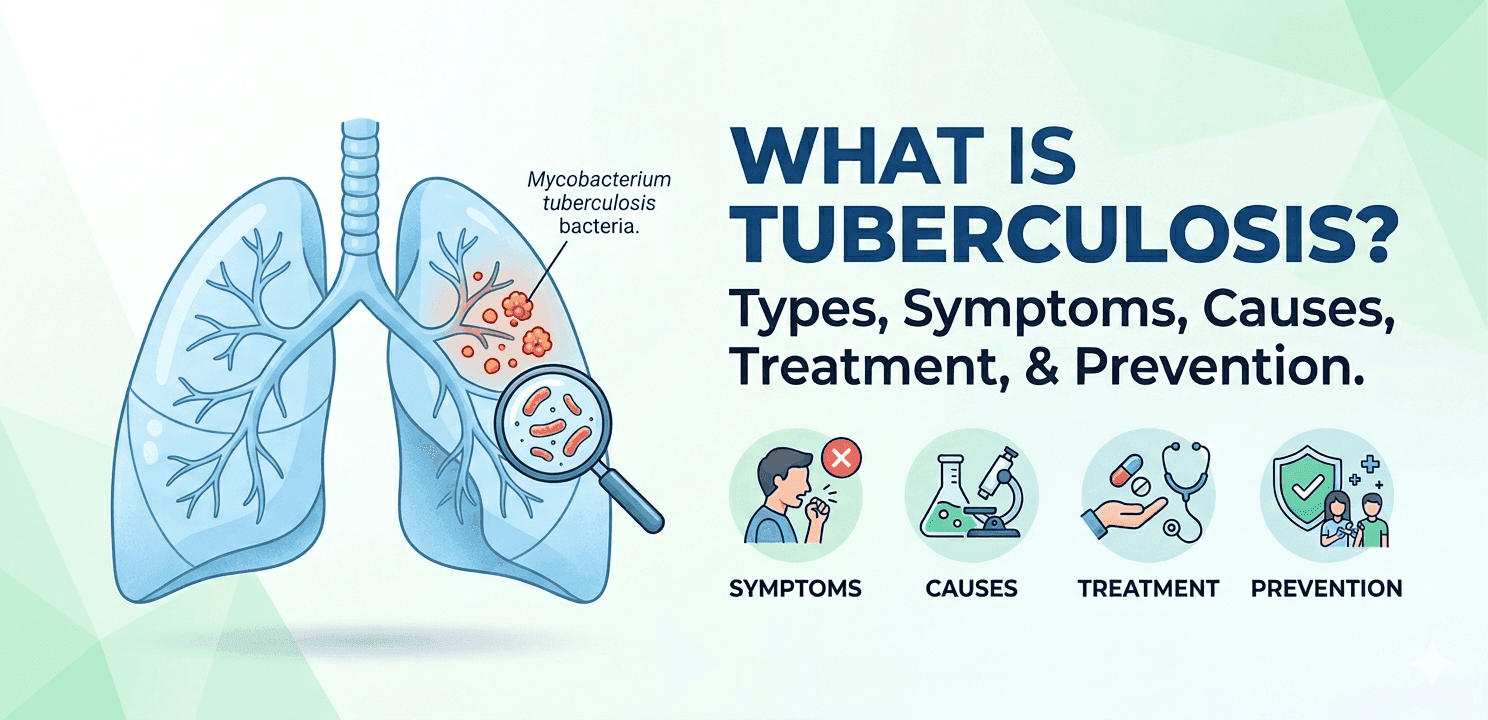
What Is Tuberculosis (TB)?
Tuberculosis, commonly known as TB, is an infectious disease caused by the bacteria Mycobacterium tuberculosis. While it mainly affects the lungs, TB can also spread to the kidneys, spine, and brain. The bacteria travel through the air when an infected person coughs, sneezes, or talks. India accounts for a significant share of TB cases globally, making awareness about the disease critical for every household.
Types of Tuberculosis
Understanding the different types of tuberculosis helps in identifying the right course of treatment. TB is broadly classified based on where the infection is active and whether it is drug-resistant.
1. Latent TB Infection
In latent TB, the bacteria are present in the body but remain inactive. A person with latent TB does not show symptoms and cannot spread the disease to others. However, if the immune system weakens, latent TB can develop into active TB disease. Treating latent TB early is important to prevent this progression.
2. Active TB Disease (Pulmonary TB)
Active TB occurs when the bacteria multiply and cause symptoms. Pulmonary TB affects the lungs and is the most common form. It is contagious and can spread from person to person through airborne particles.
3. Extrapulmonary TB
When TB spreads beyond the lungs, it is called extrapulmonary TB. It can affect the lymph nodes, bones, joints, kidneys, brain, and other organs. Some common forms of extrapulmonary TB include:
· Spinal TB (Pott's disease): affects the vertebrae, causing back pain and stiffness
· Renal TB: affects the kidneys and may cause blood in urine
· Meningeal TB: affects the membranes around the brain, leading to headaches and neck stiffness
· Lymph node TB (Scrofula): causes swelling of the lymph nodes, often in the neck
4. Drug-Resistant TB (DR-TB)
Drug-resistant TB develops when the bacteria no longer respond to the standard antibiotic medicines. There are two main categories:
· Multi-drug resistant TB (MDR-TB): resistant to at least isoniazid and rifampicin, the two most potent first-line TB drugs
· Extensively drug-resistant TB (XDR-TB): resistant to isoniazid, rifampicin, and several second-line drugs, making it much harder to treat
Treatment for drug-resistant TB is longer, more complex, and more expensive than standard TB treatment.
Symptoms of Tuberculosis
TB symptoms vary depending on the type and the part of the body affected. Common symptoms of pulmonary (lung) TB include:
· A persistent cough lasting three weeks or longer
· Coughing up blood or mucus
· Chest pain
· Fatigue and general weakness
· Loss of appetite
· Night sweats
· Chills and fever
· Unexplained weight loss
If TB spreads to other parts of the body, additional symptoms may appear. Back pain and stiffness can indicate spinal TB. Blood in urine may point to renal TB. Persistent headaches or a stiff neck can be signs of meningeal TB.
Causes of Tuberculosis
TB is caused by the bacterium Mycobacterium tuberculosis. It spreads through the air when an infected person coughs, sneezes, or talks, releasing tiny droplets that carry the bacteria. A nearby person can inhale these droplets and become infected.
TB does not spread through handshakes, sharing food or utensils, drinking from the same glass, or physical contact with infected clothing or bedding.
Who Is at Risk of Getting TB?
While anyone can develop TB, certain conditions increase the risk of infection or progression from latent to active TB:
· Weakened immune system due to HIV/AIDS, diabetes, cancer, or organ transplant medications
· Living or working in crowded settings such as prisons, care homes, or homeless shelters
· Close contact with a person who has active TB
· Travelling to or living in regions with high TB prevalence, including parts of India, Africa, and South-East Asia
· Substance use, including heavy alcohol consumption and smoking
· Very young children and elderly individuals
· Healthcare workers in TB treatment settings
Complications of Untreated Tuberculosis
When TB is not treated in time, it can cause serious, life-threatening complications. These include spinal damage leading to chronic back pain, joint damage affecting the hips and knees, kidney and liver damage, and in rare cases, a condition called cardiac tamponade that interferes with the heart's ability to pump blood. Meningitis, a serious infection of the membranes surrounding the brain, is another severe complication of TB.
How Is Tuberculosis Diagnosed?
Early and accurate diagnosis is key to effective TB treatment. Doctors use a combination of the following tests:
1. Tuberculin skin test (Mantoux test): a small amount of tuberculin is injected under the skin of the forearm and checked after 48 to 72 hours. A raised, hard bump may indicate infection.
2. Blood tests (IGRAs): interferon-gamma release assay blood tests detect whether the immune system has responded to TB bacteria.
3. Chest X-ray or CT scan: used to check for physical changes in the lungs, especially when the skin test is positive.
4. Sputum test: laboratory analysis of mucus coughed up from the lungs helps confirm the presence of TB bacteria and guides antibiotic selection.
Treatment for Different Types of TB
TB is curable with the right treatment. The type of TB determines the treatment approach:
1. Standard TB Treatment
The standard treatment for active TB involves a 6-month course of antibiotics: isoniazid, rifampicin, pyrazinamide, and ethambutol. The first two months involve all four drugs, followed by four months of isoniazid and rifampicin. Completing the full course is critical to prevent relapse and the development of drug resistance.
2. Latent TB Treatment
For latent TB, a doctor may recommend a 6-month course of isoniazid to prevent it from becoming active, especially for people with weakened immune systems.
3. Drug-Resistant TB Treatment
MDR-TB and XDR-TB require longer treatment regimens using second-line antibiotics. Treatment can last from 18 to 24 months, depending on the drug resistance profile and the severity of the condition.
Health Insurance Coverage for Tuberculosis Treatment
The cost of TB treatment can be significant, particularly for drug-resistant strains that require prolonged hospital stays and expensive second-line antibiotics. A reliable health insurance plan can help manage these costs.
Here is how health insurance can support TB treatment:
· Hospitalisation cover: costs related to hospital stays, procedures, and medical care for TB treatment
· Diagnostic cover: expenses for skin tests, blood tests, chest X-rays, and sputum tests
· Medication cover: costs of TB medicines, including second-line drugs for drug-resistant TB
· Day care procedures: treatment-related procedures that do not require overnight hospitalisation (i.e., completed within the same day)
Note: Coverage for TB under health insurance depends on the specific terms and conditions of the policy, including any waiting periods for pre-existing diseases. Always read your policy documents carefully before purchasing.
Get a Quote for Zurich Kotak Health Insurance
Frequently Asked Questions (FAQs) on Tuberculosis
Q: Is tuberculosis curable?
A: Yes, TB is curable with the right antibiotic treatment. Completing the full course of medication is important to avoid relapse and prevent drug resistance.
Q: What are the 3 types of tuberculosis?
A: The three main types of TB are latent TB infection (inactive, no symptoms), active TB disease (infectious, symptomatic), and drug-resistant TB (resistant to standard antibiotics). Active TB can further be classified as pulmonary or extrapulmonary depending on the area of the body affected.
Q: How long does TB treatment take?
A: Standard TB treatment takes 6 months. Drug-resistant TB treatment can last 18 to 24 months, depending on the severity and drug resistance profile.
Q: Is TB contagious?
A: Active pulmonary TB is contagious. It spreads through the air when an infected person coughs, sneezes, or talks. Latent TB is not contagious.
Q: Which vaccine prevents tuberculosis?
A: The Bacille Calmette-Guerin (BCG) vaccine is used to prevent tuberculosis. It is primarily given to infants and young children in high-risk regions and offers protection against severe forms of TB in children.
Q: Does health insurance cover TB treatment?
A: Most health insurance policies include coverage for TB treatment, including hospitalisation, diagnostics, and medicines. However, some policies may have waiting periods for pre-existing diseases, which could include TB. Check your policy's terms and conditions to confirm the extent of coverage.