
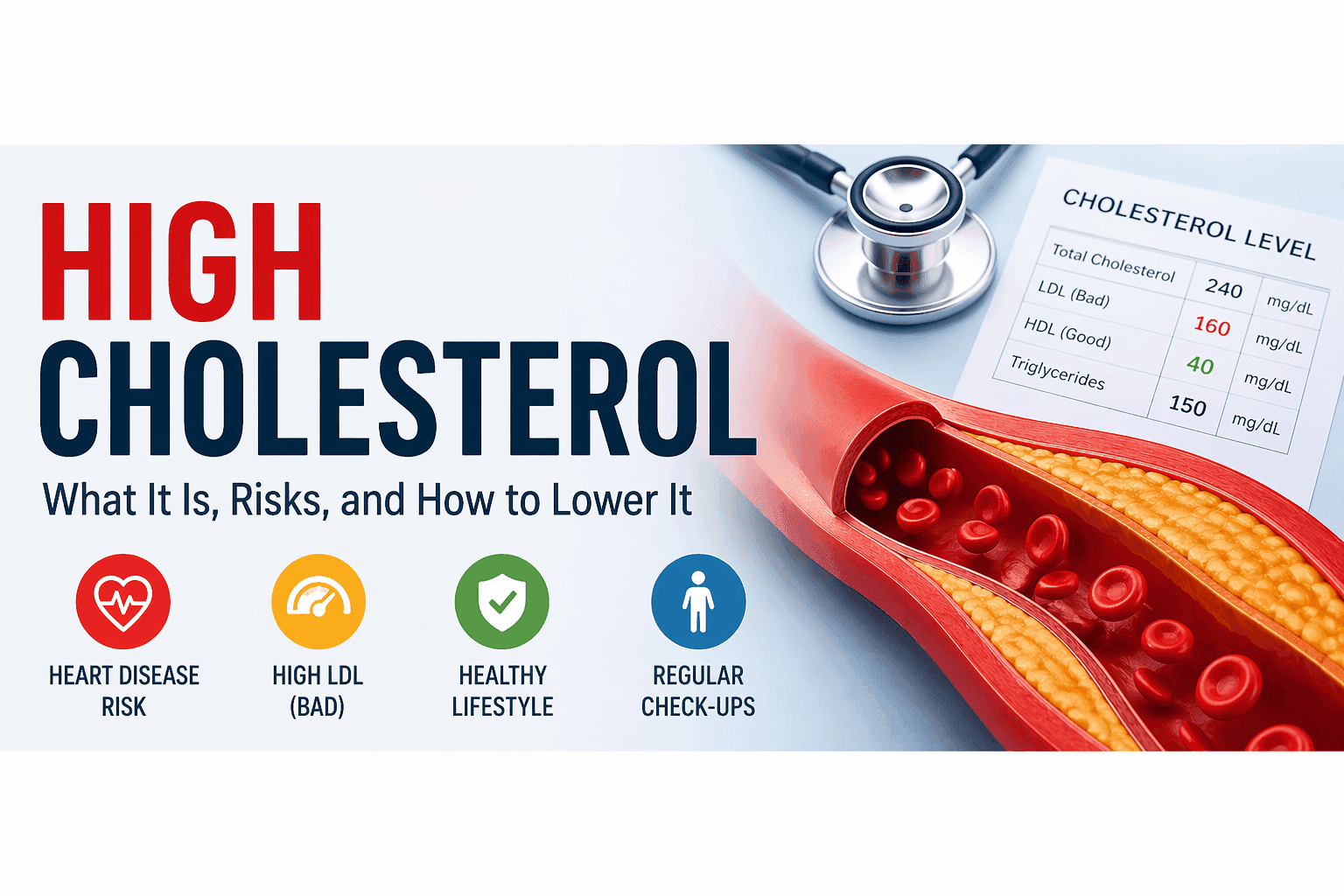
Cholesterol is a waxy, fat-like substance that the body needs to build cell walls, make hormones, and produce vitamin D. When the level of cholesterol in the blood goes too high, it can stick to the inside of arteries and form plaque. Over the years, this plaque narrows the arteries and raises the risk of heart attack, stroke, and other heart-related problems.
In India, high cholesterol is one of the most common reasons for heart disease, and it is also one of the few risk factors a person can actually change. Knowing what causes it, how it is diagnosed, what the test numbers mean, and how to bring it under control through food, exercise, and medicines can help you take charge of your heart health before serious problems begin.
What Is Cholesterol?
Cholesterol is a type of fat (lipid) that is mostly made by the liver. A small part comes from foods like meat, eggs, butter, and dairy products. The liver makes all the cholesterol the body needs, so any cholesterol from food is extra.
Cholesterol moves through the blood inside small packets called lipoproteins. Each packet has fat in the middle and a layer of protein around it.
There are two main types of lipoproteins that carry cholesterol in the blood.
low-density lipoprotein (LDL): Often called "bad" cholesterol. It leaves cholesterol on the artery walls and forms plaque, which narrows and hardens the arteries over time. High LDL is the biggest reason for heart and artery disease.
high-density lipoprotein (HDL): Often called "good" cholesterol. It picks up extra cholesterol from the blood and takes it back to the liver, where the body removes it. Higher HDL levels protect the heart.
A third blood fat called triglycerides is also checked in a cholesterol test. A high triglyceride level along with high LDL and low HDL further raises the risk of heart problems.
Normal and High Cholesterol Levels
The table below shows the standard cholesterol ranges followed in Indian and international guidelines.
Parameter | Desirable | Borderline High | High |
Total cholesterol | Below 200 mg/dL | 200 to 239 mg/dL | 240 mg/dL and above |
LDL (bad cholesterol) | Below 100 mg/dL (Below 70 mg/dL for high-risk patients) | 100 to 129 mg/dL is near optimal; 130 to 159 mg/dL is borderline high | 160 to 189 mg/dL is high; 190 mg/dL and above is very high |
HDL (good cholesterol) | 60 mg/dL and above | 40 to 59 mg/dL | Below 40 mg/dL (low) |
Triglycerides | Below 150 mg/dL | 150 to 199 mg/dL | 200 to 499 mg/dL is high; 500 mg/dL and above is very high |
These are general values. Your doctor may set a different target for you based on your age, existing health conditions, and overall heart risk.
Symptoms of High Cholesterol
In most people, high cholesterol shows no symptoms at all. It is usually picked up only when a routine blood test is done or when a serious problem like a heart attack or stroke happens.
The points below explain why the condition is often called a "silent" problem.
High cholesterol on its own does not cause any direct symptoms.
Most people with raised cholesterol feel fine and do not know they have it.
It is usually found through a routine blood test or a health check-up.
Damage builds up slowly inside the arteries through plaque formation.
In advanced cases, chest pain (angina) may occur because of narrowed heart arteries.
Pain or cramping in the legs while walking can point to peripheral artery disease.
Sudden numbness, weakness, or trouble in speech may be the warning sign of a stroke.
A regular lipid profile test is the best way to find high cholesterol early.
High Cholesterol Symptoms in Women
Women often have a slightly different cholesterol pattern than men because of the hormone oestrogen.
Before menopause, oestrogen helps women keep higher HDL and lower LDL than men of the same age.
After menopause, LDL goes up and HDL drops, so the risk of heart disease in women rises sharply.
Women with conditions like polycystic ovary syndrome (PCOS), thyroid problems, or diabetes are at a higher risk of high cholesterol.
Pregnancy can also raise cholesterol for a short time, but it usually returns to normal after childbirth.
Women may notice tiredness, jaw pain, or shoulder pain instead of typical chest pain when heart trouble begins.
Early testing through a regular health check-up is the safest way to keep cholesterol in check and avoid heart problems later in life.
Causes of High Cholesterol
The reasons behind high cholesterol fall under two groups: factors you can change and factors you cannot change.
Factors You Can Change
Diet high in saturated and trans fats: Foods like red meat, full-fat dairy, fried snacks, bakery items, and items made with vanaspati or partially hydrogenated oils raise LDL. This is one of the most common reasons for high cholesterol in India.
Lack of physical activity: Sitting for long hours and skipping regular exercise lower HDL and make it harder for the body to handle fats.
Excess body weight: Carrying extra weight, especially around the waist, is linked to higher LDL, higher triglycerides, and lower HDL.
Smoking: Smoking damages the inner lining of blood vessels and makes it easier for plaque to build up. It also lowers HDL.
Heavy alcohol intake: Drinking too much alcohol raises triglycerides and total cholesterol.
Uncontrolled diabetes: High blood sugar damages the artery lining and pushes LDL up while pulling HDL down. This pattern is called diabetic dyslipidaemia.
Factors You Cannot Change
Age: Cholesterol levels go up naturally with age. After menopause, women often see a rise in LDL.
Gender: Before menopause, women usually have lower LDL and higher HDL than men of the same age. After menopause, this gap closes.
Family history and genes: Familial hypercholesterolaemia is an inherited condition that causes very high LDL right from birth. If close family members have had early heart disease or high cholesterol, your risk goes up too.
Ethnic background: South Asians, including Indians, are known to be at a higher genetic risk of high cholesterol and heart disease than many other groups.
How Is High Cholesterol Diagnosed?
High cholesterol is diagnosed through a simple blood test called a lipid profile. The test measures total cholesterol, LDL, HDL, and triglycerides. For the most accurate result, a fasting lipid profile is done, where you do not eat for 9 to 12 hours before the test.
The Lipid Association of India (LAI) and most Indian heart societies suggest the following testing schedule.
Adults aged 20 years and above should get a lipid profile test at least once every 5 years if levels are normal.
Adults with risk factors such as a family history of heart disease, diabetes, obesity, smoking habit, or high blood pressure should be tested more often, as advised by their doctor.
Children and teenagers with a family history of early heart disease or familial hypercholesterolaemia should be screened between 9 and 11 years of age.
Your doctor may also advise extra tests such as Apolipoprotein B (ApoB), Lipoprotein(a), or a high-sensitivity C-reactive protein (hs-CRP) test if you are at higher risk.
Complications of Untreated High Cholesterol
When high cholesterol is left untreated for years, it slowly damages blood vessels and increases the chance of serious heart and brain problems.
Coronary artery disease: Plaque narrows the heart arteries and reduces blood flow, leading to chest pain (angina). A complete block can cause a heart attack.
Stroke: If plaque or a blood clot blocks an artery that supplies the brain, a stroke can occur. This may result in long-term disability or death.
Peripheral artery disease: Narrow arteries in the legs lead to pain, cramps, and numbness during walking. In serious cases, it can cause tissue damage and even amputation.
Carotid artery disease: Plaque in the neck arteries (carotid arteries) raises the risk of stroke and mini-stroke (transient ischaemic attack).
Treatment and Management of High Cholesterol
Treatment for high cholesterol usually starts with lifestyle changes. If lifestyle steps alone are not enough, the doctor may add medicines.
Lifestyle Changes
For most people, the first step against high cholesterol is a change in everyday habits.
Eat better: Cut down on saturated fats (red meat, full-fat dairy), avoid trans fats (bakery items, vanaspati, deep-fried foods), and add more fibre-rich foods such as oats, legumes, fruits, and vegetables. Include omega-3 fats from fish, flaxseeds, and walnuts.
Exercise often: Aim for at least 150 minutes of moderate exercise per week, such as brisk walking, cycling, or swimming. This raises HDL and lowers LDL and triglycerides.
Manage your weight: Losing even 5 percent to 10 percent of your body weight can bring a clear improvement in cholesterol numbers and lower heart risk.
Quit smoking: Stopping smoking improves HDL within a few weeks and reduces damage to the arteries over time.
Limit alcohol: If you drink, keep it within safe limits. Recent global health guidelines also note that there is no fully safe level of alcohol when it comes to heart health.
Medicines
When lifestyle changes alone do not bring cholesterol to the target, doctors may add cholesterol-lowering medicines.
Statins: The most common type of cholesterol medicine. Statins block an enzyme in the liver that makes cholesterol. Common ones include atorvastatin, rosuvastatin, and simvastatin.
Fibrates: These mainly lower triglycerides and may also raise HDL a little. Common fibrates include fenofibrate and gemfibrozil.
Ezetimibe: It reduces how much cholesterol the body absorbs from food. It is often given along with a statin.
PCSK9 inhibitors: These are injectable medicines used in patients with very high LDL or familial hypercholesterolaemia who do not respond well to statins.
Medical Disclaimer: This page is for general information only. It is not a substitute for advice from a qualified doctor. Please speak to your physician before starting, stopping, or changing any medicine.
How to Prevent High Cholesterol
Most steps that help in treatment also help in prevention.
Follow a heart-friendly diet that is low in saturated and trans fats and rich in fibre, fruits, vegetables, and whole grains.
Exercise for at least 30 minutes on most days of the week.
Keep your weight in check, with a BMI below 25 and waist size within healthy limits.
Avoid smoking and limit alcohol use.
Get a lipid profile test on time to catch any change early, especially if you have risk factors.
Keep co-existing health conditions like diabetes and high blood pressure under control, as these can speed up cholesterol-related damage.
High Cholesterol and Health Insurance
High cholesterol is a long-term condition, and treating its complications can be costly. Heart procedures like angioplasty, bypass surgery, or long-term medicines can put pressure on family savings. A good health insurance plan helps pay for cardiac tests (lipid profile, stress test, angiography), hospital bills, and follow-up care.
Most health insurance plans in India cover cholesterol-related complications under hospitalisation benefits. If you already have high cholesterol when you buy a policy, it is treated as a pre-existing condition and may be covered after a waiting period of up to 36 months, depending on the policy terms.
Zurich Kotak General Insurance offers health insurance plans such as Health Premier and Secure Shield that cover cardiac tests, hospital stays, and ongoing treatment for heart-related issues. You can pick a sum insured that suits your family size and city, and use cashless treatment at our network hospitals.
Get a Health Insurance Quote in 60 Seconds
Buy Health Insurance Now | Calculate Your Premium | Talk to an Advisor
Conclusion
High cholesterol is a quiet condition that often goes unnoticed until a heart attack, stroke, or peripheral artery disease occurs. The main causes include poor diet, lack of activity, excess weight, smoking, family history, and growing age. Since it produces no clear symptoms, a simple lipid profile test is the only reliable way to find it early. Lifestyle changes such as a healthy diet, regular exercise, and weight control are the first line of defence, while medicines like statins help when lifestyle steps are not enough. A health insurance plan that covers cardiac tests and hospital care adds an extra layer of safety against the long-term cost of treating cholesterol-related problems.
Read more: Health Insurance: Complete Overview of What, Why, How, and Coverage
FAQs
Q1. What Are the Main Causes of High Cholesterol?
The main causes of high cholesterol are diets rich in saturated and trans fats, lack of exercise, obesity, smoking, heavy alcohol intake, ageing, family history, and uncontrolled diabetes.
Q2. Does High Cholesterol Cause Any Symptoms?
No, high cholesterol does not show any clear symptoms in most people. It is usually found through a blood test called a lipid profile.
Q3. How Often Should I Get My Cholesterol Tested?
Adults aged 20 years and above should get a lipid profile test at least once every five years. People with risk factors like diabetes, obesity, or a family history of heart disease should test more often, as advised by their doctor.
Q4. Can High Cholesterol Be Reversed?
In many cases, yes. With the right diet, regular exercise, weight loss, and prescribed medicines, cholesterol levels can come back into the normal range. The key is to stay regular with these habits.
Q5. Does Health Insurance Cover Cholesterol Treatment?
Most health insurance plans in India cover hospitalisation for heart problems caused by high cholesterol. Pre-existing high cholesterol may be covered after a waiting period, which is set out in the policy terms.
Q6. Are Statins Safe for Long-Term Use?
For most people, statins are safe and are widely used to lower cholesterol. Side effects like muscle pain are not common, but you should report any new symptom to your doctor.
Q7. Can Young People Have High Cholesterol?
Yes. Young adults with familial hypercholesterolaemia, obesity, poor eating habits, or PCOS can also have high cholesterol. Doctors may suggest a lipid test as early as age 20.
Q8. Which Foods Help Lower Cholesterol?
Foods like oats, beans, lentils, fruits, vegetables, nuts, fatty fish, olive oil, and whole grains help lower LDL and support healthy HDL levels.
Explore more on health insurance
Easy access to more, check out these quick links