
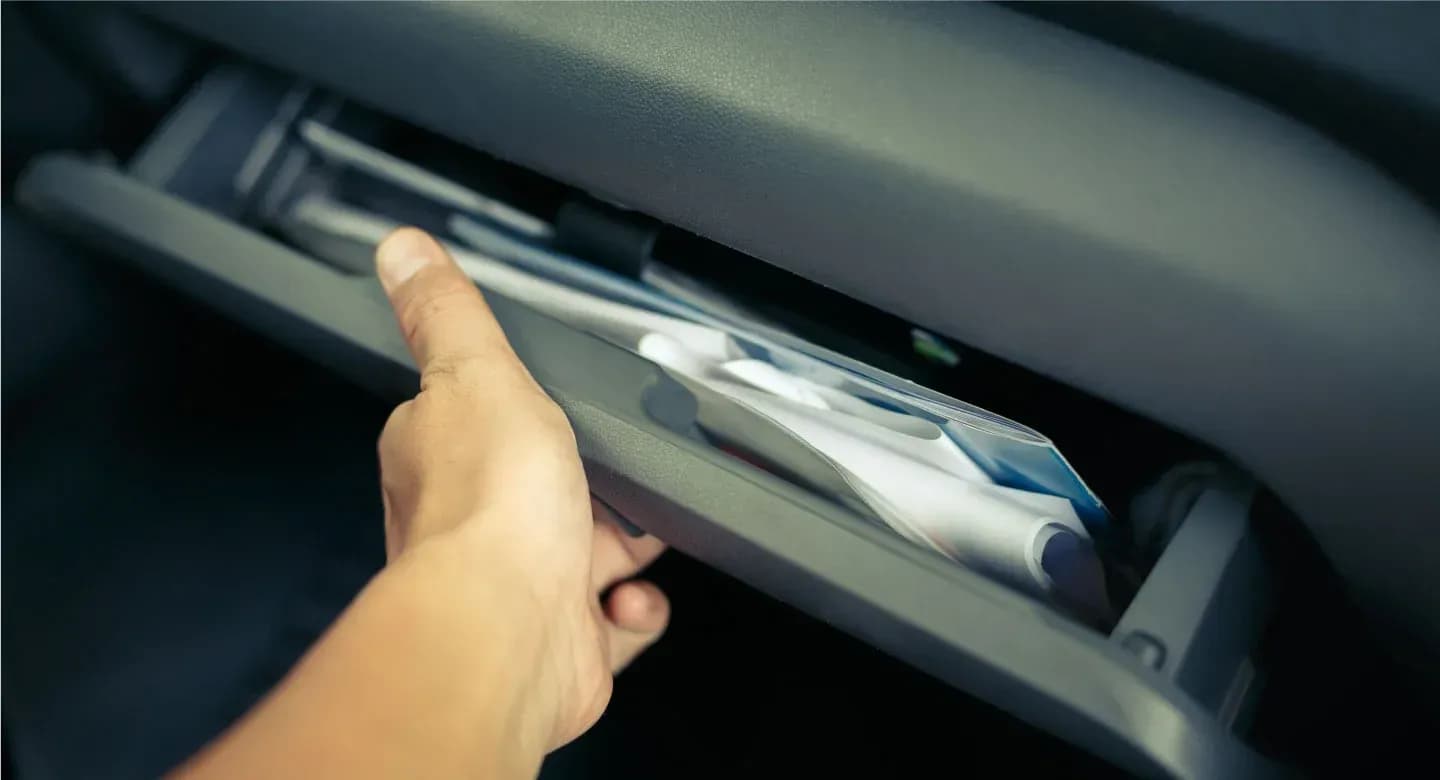
Driving a vehicle on public roads entails legal responsibilities beyond following traffic rules. Under the Motor Vehicles Act, all drivers must carry the required documents when driving. These records confirm that the car is legally registered, insured, and authorised for road use. Traffic authorities may request these papers during routine inspections or enforcement checks. Failure to produce the required driving documents constitutes a legal offence and may result in fines or other penalties. Maintaining these documents, either in physical or approved digital form, ensures compliance with the law and avoids unnecessary legal issues.
List of mandatory documents to be carried while driving
1. Registration certificate (RC)
The Registration Certificate or RC is an official document proving the vehicle's legal registration. It helps officials verify car ownership and ensure the car is not stolen. If the original is misplaced exactly when you need it, here is how to file a car insurance claim without an RC book .
As per the Motor Vehicles Act, car owners should get the RC of their new vehicle within 7 days from the date of purchase by visiting their local RTO (Regional Transport Office).
2. Driving license
Your driving license is the next essential document you should always carry while driving. RTOs issue driving licenses when an individual above the age of 18 years successfully clears a driving test. A valid driving license is a confirmation of being qualified to drive your car.
Not carrying a driving license while driving is a punishable offence. Moreover, the car insurance company can reject the claim if the driver doesn't possess the driving license and the vehicle is involved in a road accident.
3. Pollution under control (PUC) certificate
There are legal standards for the amount of pollutants a vehicle is allowed to emit. The Pollution Under Control (PUC) certificate demonstrates your car fulfilling this requirement. When purchasing a new car, the dealer will provide you with a PUC certificate with 1-year validity. After the first year, your car must regularly undergo PUC tests to check the emission levels. The PUC certificates after the initial year generally come with 6-month validity.
4. Car insurance certificate
Third- party car insurance is mandatory by law. Car owners can also purchase comprehensive car insurance for protection against Third- party damages and own damages. Whether you purchase a third- party or comprehensive policy, ensure that you always carry the insurance certificate in your car.
Always remember that expired vehicle insurance is as good as not having insurance. So, ensure that you renew your car insurance online or offline before it expires to avoid hefty penalties and remain protected at all times.
How to digitally store and access your car documents?
Car owners can digitally store and access their vehicle documents using government-approved platforms such as DigiLocker and mParivahan. These apps allow users to upload and securely store documents such as driving licences, registration certificates, insurance policies, and pollution certificates. Once uploaded, the documents can be accessed anytime through a smartphone. Under traffic regulations, digital copies available on these platforms are legally valid during road checks. Using digital storage reduces the risk of losing physical documents and ensures quick access whenever required, making compliance with traffic laws more convenient and reliable.
Why do vehicle documents matter for car insurance?
Having the proper vehicle documents is crucial not only for legal compliance but also for ensuring smooth interactions with your car insurance provider.
● Vehicle documents prove the car's ownership and legal registration.
● Insurers use them to verify the car’s eligibility for a car insurance policy.
● They are required when filing claims to verify the car’s condition and the policy's authenticity.
● Missing or outdated documents can delay or deny insurance claims.
● Keeping all required driving documents ensures smooth claim processing and protects against legal or financial issues.
Tips to keep your vehicle documents safe & updated
Proper care and organisation of your vehicle documents helps ensure legal compliance and makes insurance processes easier.
● Store physical copies of vehicle documents in a secure, waterproof folder inside the car.
● Maintain digital copies on government-approved apps such as DigiLocker or mParivahan.
● Regularly check expiry dates for documents, including the registration certificate, insurance policy, and pollution certificate.
● Renew all documents on time to remain compliant with regulations.
● Avoid carrying unnecessary originals to reduce the risk of loss or theft.
● Keep both physical and digital copies organised for easy access during road checks and smooth insurance claims.
Fines and penalties for not carrying required documents
Failing to carry the required vehicle documents while driving can result in severe fines and penalties under the Motor Vehicles Act. Traffic authorities may issue on-the-spot fines if documents such as the registration certificate, driving licence, or insurance policy are missing or expired. Penalties vary by document type and offence and may include monetary fines, vehicle impoundment, or legal notices. Repeated violations may attract higher penalties or additional legal action. Keeping all mandatory driving documents up to date and easily accessible helps avoid these fines and ensures compliance with road safety regulations.
How is car insurance linked to vehicle documents?
Keeping your vehicle documents up to date and organised is important, not only for legal compliance but also for smooth car insurance processing and claim settlement.
● Documents required while purchasing car insurance: Insurers typically ask for the Registration Certificate (RC), Driving Licence (DL), and Pollution Under Control (PUC) certificate to verify ownership, driver eligibility, and vehicle compliance.
● Role of RC, DL, and PUC in claim approval: The RC confirms ownership and registration details, the DL verifies the driver’s legitimacy, and the PUC ensures the vehicle meets emission standards, all of which are crucial for claim validation.
● Consequences of incomplete or invalid documentation: Missing, expired, or mismatched documents can delay claim processing or lead to outright rejection, creating legal and financial complications.
● Importance of keeping documents updated: Regularly renewing and safely storing both physical and digital copies ensures smooth insurance transactions, faster claim approval, and compliance with traffic regulations, protecting you from fines and disputes.
Are digital vehicle documents valid for insurance claims?
Digital vehicle documents are increasingly accepted for insurance purposes when stored on government-approved platforms. Apps like DigiLocker and mParivahan enable car owners to securely upload and access essential documents, including the RC, DL, PUC certificate, and car insurance policy. These digital copies are legally recognised under Indian regulations, making them valid during traffic checks and insurance-related processes.
Most insurers now accept digital copies of vehicle documents during claim verification, provided they are accessible via approved platforms and clearly display all necessary details. Presenting digital documents can expedite the claims process, as insurers can instantly verify ownership, driver eligibility, and vehicle compliance without relying on physical copies.
Keeping your car insurance documents digitally offers several benefits. It reduces the risk of loss, damage, or misplacement of paper documents, ensures quick access during emergencies, and allows seamless sharing with insurers when filing claims. Digital storage also helps maintain up-to-date records, making it easier to track renewal dates and other compliance requirements. By adopting digital documentation, car owners can combine convenience, security, and legal validity, ensuring smooth insurance claims and regulatory compliance.
Conclusion
Owning a car comes with responsibilities, and carrying essential vehicle documents is a key part of staying compliant with the law. Ensure that your car insurance is valid and up to date to avoid penalties and financial risks. You can easily renew your policy online in just a few minutes and receive your insurance certificate instantly.
FAQs
1. What documents should you always keep in your car?
You should always carry your RC, DL, car insurance policy, and PUC certificate. These are mandatory under the Motor Vehicles Act and must be presented during traffic checks to avoid fines or legal issues.
2. Is a digital RC valid while driving?
A digital RC stored on government-approved platforms like DigiLocker or mParivahan is legally valid. Traffic authorities and insurers recognise these digital copies during inspections or claim verification, provided the document is complete, clear, and accessible on the authorised app.
3. Which documents are needed when purchasing a new or used car?
When buying a car, you need the RC, DL, insurance policy, PUC certificate, and proof of address. For used cars, additional documents such as the No Objection Certificate (NOC) from the previous owner and proof of prior insurance are required for a smooth transfer and registration.
4. Can I go on road trips with a learning license alone?
A learning licence allows you to drive only under the supervision of a qualified driver. For solo driving, a full, valid driving licence is required. Driving alone on long trips with a learner's licence is illegal and may result in fines or penalties.
5. What will happen if I’m caught driving without a PUC certificate?
Driving without a valid PUC certificate is an offence. Authorities may impose fines, issue legal notices, or even restrict vehicle use until the certificate is renewed. It is mandatory to ensure your vehicle complies with emissions standards to avoid penalties and maintain environmental compliance.
6. Are original documents required while driving?
While carrying originals is recommended, digital copies on government-approved apps such as DigiLocker or mParivahan are legally acceptable. Ensure that digital documents are complete and accessible. Physical copies can be useful in areas with limited digital verification facilities.
7. Is car insurance mandatory while driving?
Driving without a car insurance policy is illegal under Indian law. At a minimum, third-party insurance is required to cover damages to others or their property. Driving without insurance can result in fines, legal action, and liability for all expenses in case of an accident.
8. Do I need to carry my car insurance policy copy in the car?
You should carry either a physical or digital copy of your car insurance policy. It is essential for traffic inspections and claim verification. Digital copies on approved platforms are legally valid and convenient for quick access when required.
9. What happens if I don’t have valid car insurance documents during an accident?
Without valid insurance documents, claim processing can be delayed or denied. You may also face legal penalties for non-compliance. Insurers require proper documentation to verify ownership, coverage, and policy validity before settling claims, making it essential to keep documents up to date and accessible.
10. Is an expired driving licence valid for car insurance claims?
An expired driving licence is not valid for claim processing. Insurers may reject claims if the licence is invalid at the time of an accident. Always ensure your driving licence is renewed and up to date to avoid legal and insurance complications.
11. Can I renew my car insurance without vehicle documents?
Vehicle documents such as RC, DL, and previous insurance policy are required to renew a car insurance policy. Insurers use these documents to verify ownership, eligibility, and vehicle details. Missing documents can delay renewal or prevent issuance of the policy.
RTO Office locations in India
Explore more on car insurance
Easy access to more, check out these quick links